Distortion is a grunt or ‘malfunction’ sound, usually achieved through processing, increasing gain, clipping the sound, or adding inharmonic overtones. The resulting sound can offer up an interesting colour, easily articulate dynamics, create strength for a chorus, grunge or dirty up a piece, and give music power. Distortion is a must have for many guitarists, not only for those working in heavy genres, so variants of the distortion stompbox proliferate the market. Of course, the history of these are steeped in a lineage of studio techniques, where the sound was created and fallen in love with. Below we will take a look at how pedals were born of the earlier technology.
Fuzz and Damaged Equipment
Some of the first ways of discovering and utilising distortion involved making the most of an amp that had fallen off the back of a truck. Broken equipment – whether on purpose or accidental – was a great way to get the grunting dirty sound of distortion. Practitioners recording in the studio were looking for a unique sound, whether it be to achieve the raspy tonality of old blues recordings, make the lead guitar stand out from the rhythm, or even emulate a horn section.
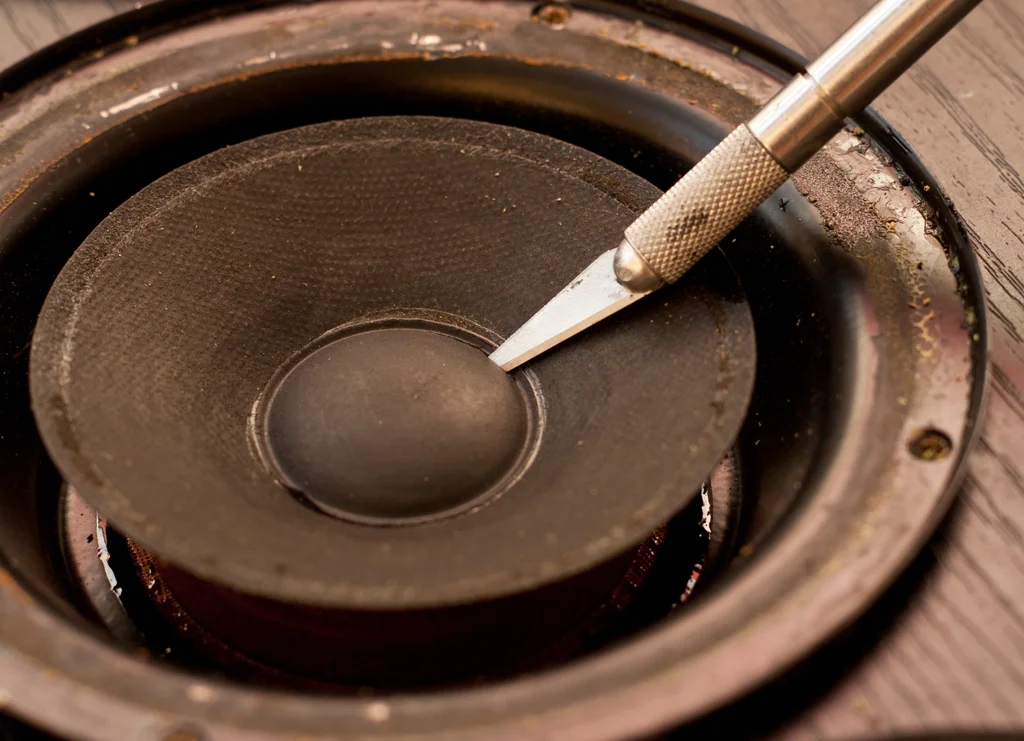
An example of such gear abuse to produce distortion comes from the unforgettable riff from “You Really Got Me” by the Kinks. Dave Davies set up included an Elpico amp, running into a Vox AC30. The driver on the Elpico was slashed with Razor Blades and punctured with knitting needles to produce its chaotic, broken up buzz.
Another such case, albeit more inadvertent gear abuse than anything else, was how the tone was produced on “Rocket 88”, recorded by Jackie Brenston and His Delta Cats. Guitarist Willie Kizart’s amp was damaged on Highway 61, in transit to a gig. Thinking fast, Kizart supported the speaker cone with old newspapers. The distortion produced was smooth, almost horn-like and pleasing enough indeed to make it on record. It surely ranks as one of the first times distortion was used as an intentional effect.
Marty Robbins was lucky enough to happen upon this technique for their song ‘The Fuzz’, crediting guitarist Grady Martin with the invention of the fuzz distortion – though it was more likely down to the faulty preamp that the guitar was recorded through. The result is one of the most incongruous appearances of fuzz on record. This sound is now emulated in such pedals as the Electro-Harmonix Big Muff, Maestro FZ-1 Fuzz-Tone, and Arbiter Group Fuzz Face.
Overdrive and Design Limits
Another way of getting distortion was to turn up the volume or gain beyond what the unit was designed to do. This puts stress on the equipment, and is described as a ‘starved plate’ or ‘amp death’ sound. This distortion is said to sound more warm than the fuzz, as overdriving clips asymmetrically, producing odd and even harmonics. Today this technique can be used quite easily – recording a tiny practise amp pushed to its limit to get an interesting scream from a clean signal for example. Often it is used in conjunction with pedals to boost the distortion, but there are single pedals that generate the sound, or stacking of pedals that further boost the overdrive. Some praised overdrive pedals are Hermida Audio Mosferatu Overdrive/Distortion, HFx Hussey Tonal Overdrive, and South Wave Audio Imagine Overdrive DD-1.
But amplifiers need not be used at all in some cases. Who could forget the extremely broken up tone of “Revolution” by the Beatles: this dirt was tracked just using the preamps on the Abbey Road console. Such a sound can be emulated on pedals like the JHS Colour Box which offers up a variety of tones from Neve console preamps.
Tube Distortion
This may be the most comfortable or known sound for guitarists when they think distortion. Tube focuses on overdriving the power valves rather than the preamp. Outboard processing in the studio meant units such as the EL84 H&K Crunch Master could influence recordings greatly to get the tube sound. The clipping of this type is symmetric, meaning usually only odd harmonics are produced – if you want warm or gentle, this isn’t it. This method of distortion is useful in Metal as the sound can be pushed hard, but not for small spaces as to get the distortion, a loud noise is needed to fill the tubes. This also means there is dissonance or difficulty in getting differentiated dynamics if you drive hard. However, emulating this sound in a pedal allows you to adjust this, the Ibanez TS9 Tube Screamer giving you the sound of tube with a solid state overdrive method. Pedals such as Fuchs Plush series Valve Job, HardWire TL-2 Metal Distortion, HardWire SC-2 Valve Distortion, Ibanez TK999HT Tube King, and Hermida Audio Zendrive 2 Tube let you bring this studio technique on stage with you.
Aside from being a really fun effect to play with, distortion is a profoundly effective on a massive range of instruments. Depending on your overall set up and how you want to push it, exploring different types of techniques, sounds, and specifications will help you involve an attention demanding sound. No matter what genre you play, it is worthwhile to look into how you can give distortion a new home on your pedal board to boost your performance and pay homage to old studio techniques.
Want a closer look at how distortion has evolved? Contact radi@noisemachines.studio or 0405 709 131 and come by for a walkthrough of our space and check out the collection of pedals, amps, and outboard we’ve built up.
Related Reads
- Capturing MK Gee’s Signature Guitar Tone
Dive into how to bring MK Gee’s iconic analog warmth to life—tape, effects, and feel all come together in the studio. - Studio Gear at Noise Machines
Curious about the tools behind the tone? Check out our full gear page to explore the pedals, amps, and outboard that help shape your sound.
Leave a Reply