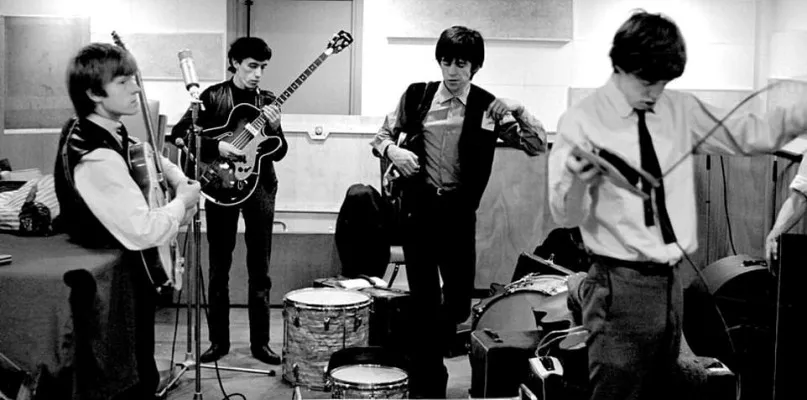
There’s long been a quiet debate in recording: do you track everything live or build it part by part? Both methods have their strengths, and most sessions today live somewhere between the two. The best choice depends on what you’re chasing.
The Energy of a Live Take
Recording a band live captures the interaction between players in a way that’s hard to reproduce. When everyone’s hearing the same thing at the same time, the performance tends to move naturally. Subtle timing shifts, shared cues, and small variations in playing all add up to a sound that feels connected.
Classic albums like The Rolling Stones’ “Exile on Main St.” and Alabama Shakes’ “Sound & Color” are examples of that connection at work. The takes weren’t about perfection, they were about capturing a moment in time. The sound of the room, the balance between instruments, and the response between players gave those records their character.
The Precision of Overdubbing
Overdubbing allows for a more controlled and focused recording process. Working on one element at a time lets you fine-tune performances and sounds, making it easier to experiment with tone or arrangement. It’s especially useful for projects that rely on layers or intricate textures.
Artists like Billie Eilish and Radiohead use this approach to build precise and detailed productions. Each sound is placed intentionally, shaped through multiple takes until it sits exactly where it should. Overdubbing gives you that flexibility and a way to sculpt the mix as you go.
Combining the Two Approaches
Most modern sessions mix both worlds. You might start by recording drums and rhythm parts live to capture the groove, then add vocals, guitars, or synths later with more focus. This method keeps the performance alive while allowing you to refine and shape it over time.
Choosing which path to take depends on the material and the musicians involved. Some songs come to life through collective energy; others need a more deliberate build. The key is understanding what each track needs and how the recording process can support that.
How the Room Shapes the Result
The recording environment plays a major role in how either approach sounds. A live room adds natural reflection and space, which can make a performance feel cohesive. A tighter or treated room gives you the control needed for overdubbing. Microphone choice and placement bridge those worlds — room mics can add life, while close mics bring clarity.
Even with the tools available in modern production, there’s still value in capturing musicians in the same physical space. The subtle ambience and shared sound help create a sense of unity that’s difficult to recreate digitally.
Choosing What Serves the Song
Both methods have their place. Live recording captures movement and personality, while overdubbing builds depth and precision. Blending the two often leads to the most satisfying results, inspired performances that feel spontaneous but sound polished.
If you’re exploring that balance, Noise Machines has the space, gear, and engineers to help you find the right setup for your project.
Reach out to Radi at radi@noisemachines.studio or call 0405 709 131 to start planning your next session.
Related Reads
- Natural Space in a Digital World
How capturing real space adds depth and cohesion that plugins can’t replicate. - Inside Studio A at Noise Machines
Take a closer look at the main live room and how it’s designed to suit both full-band tracking and focused overdubs.