Exploring Previously Unexploited Sonic Possibilities with the DIYRE L2A Reamp Box

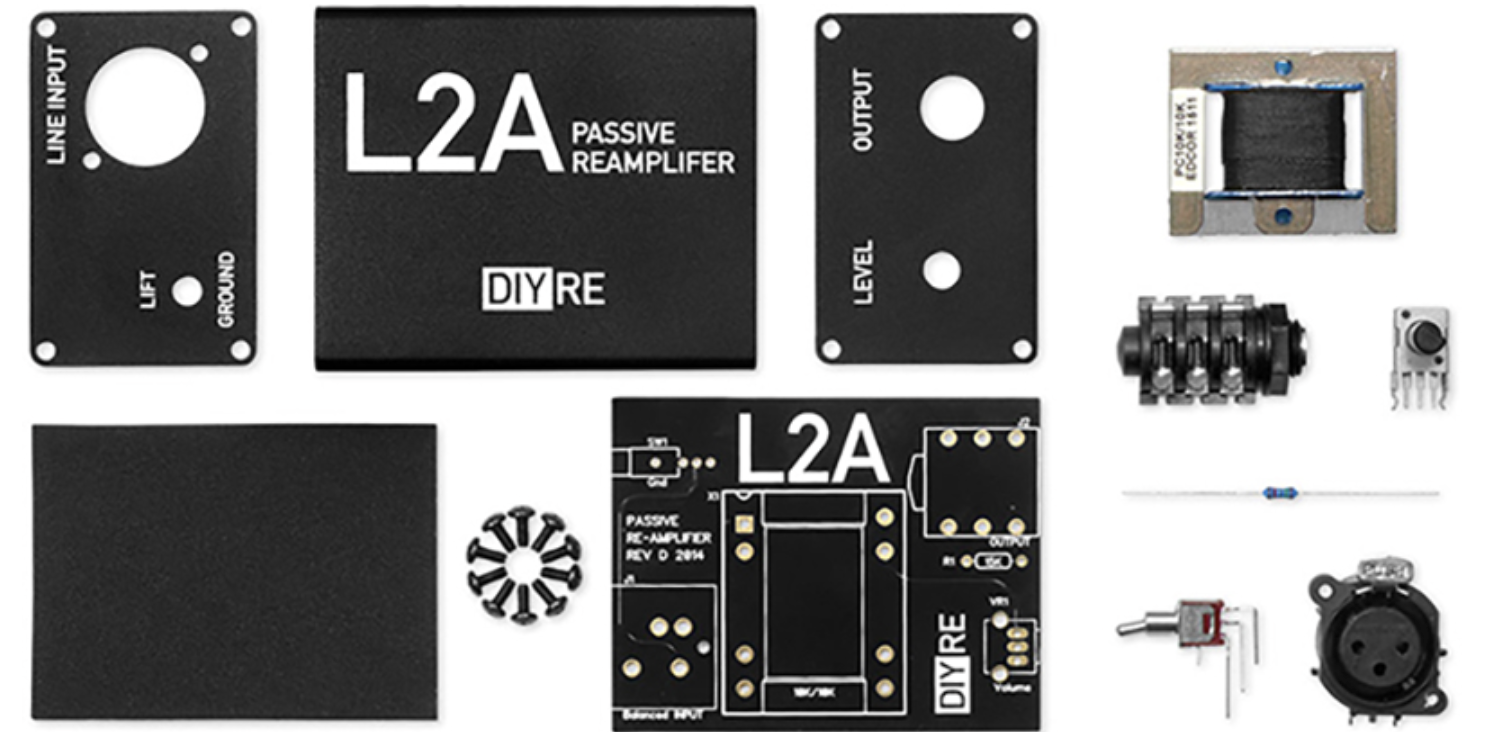
There are a few cool things about the humble L2A passive reamp box by DIYRE (Do It Yourself Recording Equipment). It’s pocket-sized package in black with understated typeface makes it perfect for the studio. Reamping as a production technique promises hours of fun exploring previously unexploited sonic possibilities. Above all: the DIY element actually means you can learn how it works inside and out, and practise your soldering chops at the same time.

DIYRE are making some incredible DIY kits for some really solid studio tools, not in the least is the L2A reamp box, a great little piece of gear that can solve problems and inspire creativity.

Reamping as a concept is gaining traction fast in the recording studio realm, with many new models of audio interface including built-in reamp outputs. The ability to reamp signals adds extra depth and sonic possibilities to your mix. The basic principle allows guitar amps and pedals to be used as outboard sound processors. Wanna send your vocals through an overdriven amp with a dash of chorus? Sure, why not? Wanna put your snare through epic fuzz with some spring reverb? Let’s do it.

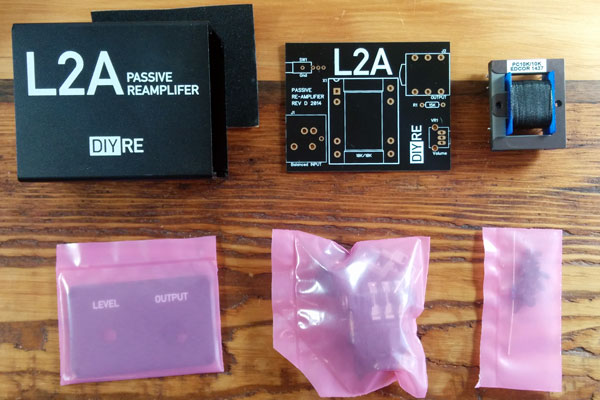
The reamp box houses the critical electronic component in the process: the transformer. The transformer takes the balanced, line-level output from the audio interface and converts it to an unbalanced, instrument-level signal, ready to plug into a guitar amp, or chain of stomp boxes. In this way, it’s essentially the reverse of a DI box.

On the L2A, there’s a volume attenuator so you can control the amount of signal that flows into the guitar amp, as well as a ground lift switch, which can come in handy with unbalanced signals, as they can be affected by earth hums.
l2a reamp box

In application, much depends on the philosophy of the production. It can be used to solve problems on a purely practical level. Being able to record a bass guitar with a DI box to avoid spill and reamping later is hugely advantageous in a smaller studio, for example. Taking dull, overly clean guitar recordings and reamping them to add controlled colour can elevate a mix no end.

Where this technique really shines, however, is in its more creative applications. As with the aforementioned experiments with vocals and snare, reamping can be adventurous. Stompboxes can be repurposed as outboard and “performed” in the mix. Additional sonic landscapes can be plundered and then folded into the mix, to be paired up with their more traditional-sounding counterparts.

So go forth, multiply your options and have fun with reamping. Better still, investing the (very reasonable) cost in the L2A, and the time to build it, might even help you to understand basic electronic principles. You can never have too much knowledge of your gear works in the studio.

If you want to have a look at how the whole process goes, have a look below:

Curious to experiment with reamping and creative studio techniques? Reach out to Radi at radi@noisemachines.studio or call 0405 709 131 to book your session.

Related Reads

17 responses

  1. Thank you for your sharing. I am worried that I lack creative ideas. It is your article that makes me full of hope. Thank you. But, I have a question, can you help me?

  2. Building your own reamp box while actually understanding the signal chain inside adds a layer of confidence when troubleshooting sessions later. That DIY knowledge pays dividends far beyond the L2A itself, especially when experimenting with unconventional guitar tones or breathing new life into flat-sounding DI tracks.

  3. Greetings audio architects. Expanding sonic horizons through custom hardware builds unlocks incredible studio versatility. Reversing signal levels safely via quality transformers definitely changes production workflows, allowing mundane tracks to gain rich, organic analog warmth. Phenomenal exploration showcasing creative engineering.

  4. This was a really interesting read,i have mostly thought of reamping as something for guitars, but the examples of running vocals or drums through amps and pedals definitely sparked some new ideas,i also like that you explained the role of the transformer in simple terms ,it makes the whole process much less intimidating for people who are new to it.

  5. This article explains reamping in a very approachable way, especially for people who are curious about expanding their studio workflow. I like how it highlights both the technical side and the creative possibilities of the DIYRE L2A. Using pedals and amps in unexpected ways can really bring new character to recordings. The DIY aspect is also interesting because building your own gear gives a better understanding of how everything works instead of just using equipment blindly.

  6. The DIYRE L2A Reamp Box looks like an exciting tool for musicians and producers who love experimenting with sound. Its simple design, creative possibilities, and hands-on DIY approach make it a great addition to any recording setup.

  7. The DIYRE L2A passive reamp box is a fantastic tool for studios, combining simplicity, creativity, and hands-on learning. Its compact design and DIY approach make it ideal for exploring new sounds while improving technical skills like soldering and understanding audio equipment.

  8. I really enjoyed the way this article explained reamping in such a practical and approachable way.i really liked the explanation of how the transformer converts line-level signals into instrument-level signals, making guitar pedals and amps useful for much more than guitars,thanks for the inspiring read!

  9. It’s interesting to see, how reamping can expand the possibilities of a home studio setup by allowing artists to experiment with different tones, textures, and effect,Reamping is such a powerful technique for discovering new sounds and adding character to recordings.Thanks for sharing such an interesting perspective on studio experimentation!

  10. The DIYRE L2A Reamp Box is an exciting tool for musicians and producers who enjoy experimenting with sound. Its creative flexibility allows artists to explore new textures, enhance recordings, and understand audio techniques better. A great example of how simple gear can inspire innovative studio workflows.

  11. This article provides an excellent introduction to reamping and its creative potential in music production. The explanation of the DIYRE L2A Reamp Box is clear and engaging, showing how practical studio tools can inspire unique sound design while helping musicians and producers expand their technical skills and recording techniques.

  12. This is a fantastic exploration of how a simple piece of studio gear can unlock a huge range of creative possibilities. The DIYRE L2A Reamp Box is a great example of how understanding the tools behind music production can inspire experimentation and improve workflow. I really like the emphasis on reamping not just as a technical solution, but as a way to discover unique textures and sounds. The DIY aspect also makes it a valuable learning experience for producers who want to understand their equipment on a deeper level.

  13. A reamp box plays an important role in audio processing by using a transformer to convert line-level signals into instrument-level signals. This allows seamless connection with guitar amplifiers and stomp boxes while preserving sound quality and providing greater creative control during recording and production.

  14. This article offers a fascinating look at how DIY audio equipment can inspire creativity in music production. The explanation of reamping techniques and the DIYRE L2A Reamp Box shows how simple tools can open new sonic possibilities. It’s interesting to see how experimentation with gear can help producers develop unique sounds while learning more about the technology behind their setups.

  15. Reamping is an amazing way to experiment with sound and add new character to recordings, it also opens up so many possibilities beyond traditional recording methods.DIY audio projects like this, are a great way to learn more about recording technology!

  16. This article beautifully explains the creative potential of reamping beyond its technical purpose. The ability to experiment with amps, pedals, and unconventional signal processing can truly transform ordinary recordings into unique sonic experiences. A great read for producers and audio enthusiasts!

  17. Reamping opens exciting creative opportunities for modern music production by transforming recorded tracks with real amps, pedals, and unique effects. This technique gives producers greater flexibility, allowing experimentation with vocals, drums, and instruments to achieve distinctive tones and richer mixes.

Leave a Reply

Your email address will not be published. Required fields are marked *